When I first started out as a cooler evaporator supplier, I didn’t fully grasp just how much fouling could derail a system’s performance—until I had a client reach out panicking because their cold room was taking twice as long to restock inventory. Turns out, the evaporator coils were covered in a thick layer of dust, lint, and even some food residue, and they’d been running that way for months. That moment made me realize: fouling isn’t just a “cosmetic” issue. It’s a silent performance killer that every single one of our equipment users has to deal with at some point.
Let’s break this down simply, no overly jargon-heavy stuff. First, what is evaporator fouling, anyway? It’s basically any unwanted material that builds up on the surface of your cooler evaporator’s coils or fins. For our clients, that could be things like dirt, dust, mold, mildew, food particles (especially in food processing plants), or even ice buildup that’s gone unchecked. No matter the material, once it sticks to the coils, it acts as a barrier between the cold refrigerant inside the coils and the air that’s supposed to circulate through them to cool your space.
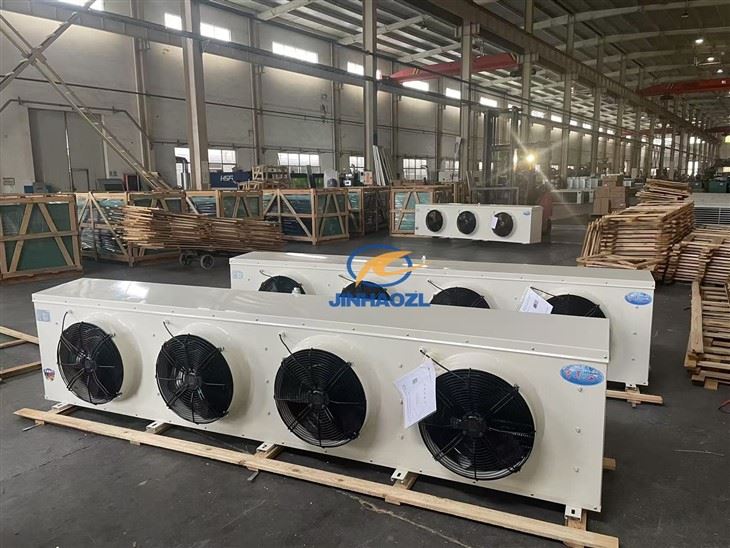

Now, let’s talk about the real effects here. The biggest one is a hit to cooling efficiency. Think of it like a wet blanket draped over the coils—heat can’t transfer properly. If your system is supposed to pull heat out of the cold room at a rate of, say, 10,000 BTUs per hour, fouling might cut that rate by 20% to 40%. That means your compressor has to run way more often, and longer, to maintain the set temperature. Not only does that spike your energy bills (I’ve seen some clients’ monthly power costs jump 30% after ignoring a small fouling issue for a quarter), but it also wears out the compressor faster. Compressors are one of the priciest parts of any refrigeration system, so replacing them prematurely is a huge headache.
Fouling also messes with air flow through the evaporator. Those fins on the coils are designed to guide air evenly across the entire coil surface. If they’re clogged with gunk, air can’t pass through easily—so some parts of the coil are working hard, while others are barely doing anything. That leads to uneven cooling: one corner of the cold room might be the right temperature, while another is too warm, risking spoiled inventory. For food processing clients, that’s a literal loss of product. For cold storage warehouses, that means extra work for staff moving stock around to avoid hot spots.
Wait, there’s also a moisture issue. If fouling includes mold or mildew, it can trap moisture on the coils, which not only makes the fouling worse over time (it’s a cycle, basically—moisture attracts more dirt, which holds more moisture) but can also cause corrosion of the coils. Corroded coils develop tiny leaks, and refrigerant escapes. A refrigerant leak isn’t just bad for performance—it’s a safety hazard, and fixing it usually means downtime and costly repairs. I’ve had a few clients come to us because their small stainless steel air cooler evaporator 2 fans had corroded coils, and we ended up supplying a replacement because the repair wasn’t worth it.
Now, let’s be real—some fouling is avoidable, but a lot of it is inevitable. For example, commercial kitchens have tons of grease and food particles in the air, which stick to evaporator fins instantly. Cold storage warehouses might have dust from loading docks or packaging materials. That’s why choosing the right type of cooler evaporator for your space matters. We carry a range of options built to handle different fouling risks, like the DL/DD/DJ Type Air Cooler, which is designed with easily accessible fins for quick cleaning, or the DD Type Medium Temperature Ceiling Air Cooler that’s sealed to reduce dust buildup in high-draft areas. For food processing plants that deal with heavy food residue, our DLE Type Dual Discharge Air Cooler | Stainless Steel | Efficient Cooling For Cold Rooms & Food Processing has smooth, easy-to-wipe stainless steel surfaces that prevent food particles from sticking as much as standard metal. Even our Explosion-proof Air Cooler For Cold Storage | Industrial Refrigeration Evaporator With Explosion-proof Fan Motor has sealed components to keep dust and debris out of the fan motor area, which is a common spot for fouling to cause system failures.
So, what can you do to minimize the impact of fouling? First, regular cleaning. I know it’s tempting to put it off, but a 15-minute wipe-down of the fins once a month (or every two weeks in high-dirt environments) goes a long way. Second, routine inspections. We recommend having a technician check your evaporator during seasonal tune-ups—like before summer, when cooling demand spikes, or before winter if your system is running year-round. Third, pick equipment that matches your space. If you’re in a high-moisture, high-dirt area, don’t go for a standard evaporator—opt for something with corrosion-resistant materials and easy maintenance, like our small stainless steel air cooler evaporator 2 fans, which are built for tight spaces and easy upkeep.
Let me wrap this up with a real example. A local bakery client of ours had a standard evaporator in their cold storage for baked goods. They didn’t clean it regularly, and within 6 months, fouling had built up so much that their system could only maintain 38°F when they needed 36°F. Their cookies and bread started going stale faster, and they were throwing out $1,000 worth of inventory every month. After we replaced their old unit with a DLE Type Dual Discharge Air Cooler, and set them up with a monthly cleaning schedule, their cooling efficiency went back to normal, their inventory loss dropped to almost zero, and their power bills went down 25%. That’s the difference between understanding fouling’s effects and ignoring them.
Fouling isn’t a problem you have to handle alone. As a cooler evaporator supplier, we don’t just sell equipment—we help our clients choose the right units for their specific needs, give tips on maintenance, and replace or repair systems when fouling has caused too much damage. If you’re noticing your cooler is running nonstop, your energy bills are higher than usual, or some areas of your cold room aren’t cooling right, don’t wait until it’s a full breakdown. Reach out to us, and we can help you figure out if fouling is the issue, and find the right solution—whether that’s a cleaning service, a maintenance plan, or a new evaporator like the ones we offer on our site.
Don’t let fouling turn your cooling system from a reliable workhorse into a costly headache. Take action now, and you’ll save money on repairs, energy, and spoiled inventory in the long run.
References
- American Society of Heating, Refrigerating and Air-Conditioning Engineers (ASHRAE). (2021). Refrigeration systems and applications handbook: Evaporator performance and fouling effects. ASHRAE.
- Industrial Refrigeration Association. (2022). Maintenance best practices for evaporator coils in commercial cold storage. IRA Technical Bulletin.
- National Food Service Management Association. (2023). Energy efficiency impacts of evaporator fouling in food processing facilities. NFSMA Report.
- Cooling Technology Institute. (2020). Fouling mechanisms and mitigation strategies for air-cooled heat exchangers. CTI Journal.