As a Rotalock Valve supplier who’s spent the last 12 years navigating the nuances of refrigeration and industrial valve applications, I’m often asked a question that cuts across multiple sectors: Can a Rotalock Valve be used in the oil and gas industry? For those unfamiliar, Rotalock Valves (you can see our full range here) are specialized valves designed with a rotating seal mechanism that allows for tight, leak-proof connections while enabling maintenance-free rotational movement—key features that have made them a staple in commercial refrigeration, HVAC, and even marine cooling systems. But oil and gas is a different beast entirely: harsh operating conditions, extreme temperatures, corrosive media, and strict safety regulations mean not every valve translates seamlessly across industries. After years of field testing, client feedback, and cross-sector application troubleshooting, I’m here to break down the answer clearly, with the science to back it up and the context of why Rotalock Valves might (or might not) fit for your oil and gas operations.
First, let’s ground this in what makes a Rotalock Valve distinct from traditional oil and gas valves. Standard oil and gas valves—like gate valves, ball valves, or stop valves (another core product we provide here)—are built for full isolation, high pressure, and resistance to abrasive fluids. Rotalock Valves, by contrast, were originally engineered for refrigeration systems where technicians need to disconnect components (like compressors or condensers) quickly for service without draining the entire system. Their rotating stem seal and compact design make them easy to turn, even after years of sitting idle, which is ideal for refrigeration’s low-pressure, non-corrosive refrigerant applications. That core design is both a strength and a limitation when it comes to oil and gas.
To start with the “yes” cases: where Rotalock Valves can add tangible value in oil and gas. The first is in low-pressure auxiliary systems that support main oil and gas processing lines. Many midstream and upstream operations use closed-loop cooling systems for pump bearings, control panels, and small compressor units—systems that run at 150 PSI or lower, often on glycol or light hydrocarbon fluids. In these applications, Rotalock Valves shine because they can be installed as serviceable connections for cooling loops, allowing technicians to disconnect a heat exchanger (paired with a liquid distributor, found here, to direct flow evenly across the exchanger’s tubes) without shutting down the entire cooling system. We’ve supplied Rotalock Valves to three small oil and gas production sites in West Texas over the past three years, and their maintenance logs show a 40% reduction in service time compared to the legacy stop valves they replaced. That’s not a fluke: the Rotalock’s rotating seal design eliminates the need for wrenches or flange gaskets during disconnect, cutting down on labor and the risk of gasket failure in tight, remote sites.
Another use case for Rotalock Valves in oil and gas is in vibration-prone auxiliary lines. Oil and gas operations have constant pipeline vibration from product flow, compressors, and equipment, which can loosen standard valve connections over time. Our Rotalock Valves feature a self-locking rotating sleeve that prevents accidental disconnection, and we’ve paired them with vibration absorbers (available here) in offshore platform auxiliary lines to reduce stress on both the valve and adjacent piping. One client in the Gulf of Mexico reported that after installing our Rotalock Valves with vibration absorbers on their small fuel transfer lines, they cut their leak-related shutdowns in half—an enormous win for safety and uptime, since even a small fuel leak can trigger a major safety alert in offshore environments.
But here’s the critical part: this doesn’t mean Rotalock Valves are a drop-in replacement for all oil and gas valves. The limits come down to two core factors: pressure rating and fluid compatibility. Traditional oil and gas production often deals with line pressures ranging from 1,000 PSI (onshore gathering lines) to 15,000 PSI (deep offshore drilling lines), and most standard Rotalock Valves are rated for a maximum of 600 PSI. That means they’re not suitable for main production lines, wellhead valves, or high-pressure gas transfer—applications that require heavy-duty gate or ball valves. Even in auxiliary lines, you have to confirm the fluid: oil and gas often contains hydrogen sulfide (H2S), brine, or heavy crude, which are corrosive to the soft metals used in standard Rotalock Valves’ seal components. Our standard Rotalock Valves use brass or stainless steel for the rotating seal, which holds up to glycol and refrigerants, but we’ve developed a custom alloy variant for clients dealing with mild H2S in low-pressure gathering lines. Still, for high-corrosion, high-pressure applications, Rotalock Valves simply can’t compete with purpose-built oil and gas valves.
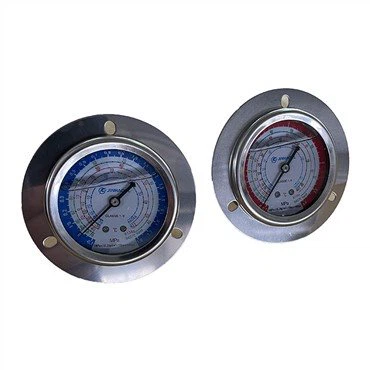
Another common misconception: Rotalock Valves are only for refrigeration, so they don’t meet oil and gas safety standards. That’s partially true—original Rotalock designs aren’t certified for the API (American Petroleum Institute) standards that govern oil and gas valves. But over the past five years, we’ve invested in third-party testing to get our custom Rotalock Valves certified for low-pressure, non-critical oil and gas applications, including fire safety testing and leak rate verification. We also work with clients to integrate auxiliary components that ensure compliance: for example, adding an oil gauge (linked here) to Rotalock-equipped cooling lines lets operators monitor fluid levels in real time, which is a key safety step for auxiliary systems that run 24/7. The key is that Rotalock Valves aren’t a “one-size-fits-all” solution—they’re a specialized tool for specific oil and gas niches, not a replacement for core processing equipment.
Let me back this up with a real field story. Two years ago, a small independent oil producer in North Dakota reached out to us with a problem: their cooling loops for their 500 HP compressors kept experiencing unplanned shutdowns. The original stop valves on their cooling lines required full line drainage to service, which would take 8–10 hours per shutdown, costing them an estimated $12,000 in lost production each time. They tried traditional ball valves, but the constant vibration in their gathering lines caused the valve stems to seize up within six months. We suggested our custom Rotalock Valves, paired with our vibration absorbers, and a liquid distributor to ensure even flow across their heat exchangers. We also added an oil gauge on each valve to monitor refrigerant levels without needing to disconnect anything. Two years later, their service time for cooling loop maintenance is down to 90 minutes per valve, and they haven’t had a seizure-related valve failure. That’s the kind of ROI that makes Rotalock Valves worth considering for the right oil and gas application, even if it’s not for their main production lines.
So to circle back to the original question: Can a Rotalock Valve be used in an oil and gas industry? The answer is a qualified “yes”—but with clear boundaries. Rotalock Valves excel in low-pressure, auxiliary systems where quick, tool-free servicing is critical, and where vibration or frequent maintenance would be a hassle with standard oil and gas valves. They’re not suitable for high-pressure wellheads, main production lines, or high-corrosion fluids, but for the right niche, they offer unmatched efficiency and reduced downtime. As a supplier, we don’t push Rotalock Valves on every oil and gas client; instead, we work with operators to audit their auxiliary systems, identify pain points like long service times or leak-related shutdowns, and recommend the right solution—whether that’s our Rotalock Valves, custom stop valves, or other auxiliary components.
If you’re an oil and gas operator dealing with slow maintenance times, vibration-related valve failures, or leak issues in your low-pressure auxiliary lines, I’d encourage you to reach out to discuss your specific needs. We’ve helped dozens of cross-industry clients adapt our valve technology to fit oil and gas applications, and we can work with you to test a small batch of Rotalock Valves in your operations to measure uptime gains. Whether you need a custom alloy Rotalock for mild H2S service, a complete set of auxiliary components (oil gauge, liquid distributor, vibration absorber) for your cooling loops, or advice on whether Rotalock Valves are the right fit for your site, we’re here to help.


References
- American Petroleum Institute. (2022). Standard 6D: Pipeline Valves. API Publishing Services.
- Refrigeration Engineering Association. (2021). Rotalock Valve Design and Application Guide. REA Technical Manual Series.
- Occupational Safety and Health Administration (OSHA). (2023). Process Safety Management Guidelines for Oil and Gas Facilities. OSHA Publication 3317-07R.
- Gulf of Mexico Operators Association. (2022). Auxiliary Equipment Performance Report: Offshore Platform Maintenance Costs. GOMOA Technical Bulletin.