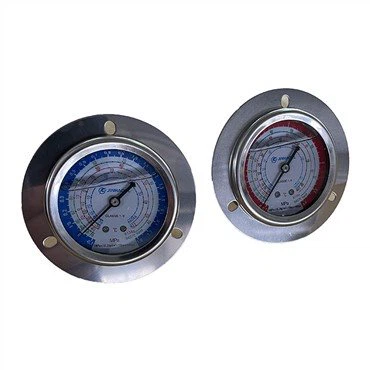
What is the impact of pressure fluctuations on sight glasses?
In the field of industrial equipment monitoring and control, sight glasses play a crucial role. As a supplier of Sight Glasses, I have witnessed firsthand the importance of these devices in various systems. However, pressure fluctuations can pose significant challenges to the performance and longevity of sight glasses. This blog post aims to explore the impact of pressure fluctuations on sight glasses and how to mitigate these effects.
Understanding Pressure Fluctuations
Pressure fluctuations are common in many industrial processes. They can occur due to a variety of reasons, such as sudden changes in flow rates, temperature variations, or the operation of valves and pumps. For example, in a refrigeration system, the opening and closing of expansion valves can cause rapid changes in pressure within the pipes. In a chemical processing plant, the reaction kinetics and the addition or removal of reactants can lead to pressure variations in the vessels.
These fluctuations can be either periodic or random, and their magnitude and frequency can vary widely depending on the specific process. High - frequency, low - magnitude fluctuations may be caused by minor disturbances in the system, while low - frequency, high - magnitude fluctuations can result from major operational changes or system malfunctions.
The Structure and Function of Sight Glasses
Before delving into the impact of pressure fluctuations, it is essential to understand the structure and function of sight glasses. Sight glasses are transparent windows installed in pipes, tanks, or vessels to allow operators to visually inspect the contents inside. They are typically made of materials such as glass, acrylic, or polycarbonate, selected based on their transparency, chemical resistance, and mechanical strength.
Sight glasses come in different shapes and sizes, including round, rectangular, and oval. They are often equipped with gaskets and seals to ensure a leak - proof connection with the equipment. The main function of sight glasses is to provide real - time information about the flow, level, and condition of fluids, such as liquids, gases, or slurries. This information is vital for process control, safety, and maintenance purposes.
Impact of Pressure Fluctuations on Sight Glasses
Mechanical Stress
One of the most significant impacts of pressure fluctuations is the mechanical stress they impose on sight glasses. When the pressure inside the system changes, the sight glass experiences differential pressure across its surface. This differential pressure creates a force that acts on the glass, causing it to deform.
If the pressure fluctuations are severe or occur frequently, the repeated deformation can lead to fatigue in the glass material. Fatigue is a process where the material's strength gradually decreases over time due to cyclic loading. Eventually, this can result in cracks or fractures in the sight glass, leading to leaks or a complete failure of the device.
Seal Integrity
Pressure fluctuations can also affect the integrity of the seals and gaskets used in sight glasses. The seals are responsible for preventing leaks and maintaining a proper pressure boundary between the inside of the system and the outside environment.
During pressure fluctuations, the seals are subjected to changes in pressure and compression. High - pressure spikes can cause the seals to be squeezed more tightly initially, but if the pressure then drops suddenly, the seals may not fully recover their original shape. This can lead to gaps or deformations in the seals, allowing fluids to leak past. Over time, repeated pressure cycling can degrade the seal material, reducing its sealing performance and increasing the risk of leakage.
Optical Distortion
In addition to mechanical damage, pressure fluctuations can cause optical distortion in sight glasses. When the glass is deformed under pressure, its refractive index can change, leading to refraction and distortion of the light passing through it.
This optical distortion can make it difficult for operators to accurately observe the contents inside the system. For example, in a situation where operators need to monitor the level of a liquid in a tank, optical distortion can make the liquid level appear higher or lower than it actually is, leading to incorrect decisions regarding the process.
Mitigating the Impact of Pressure Fluctuations
Selection of Appropriate Materials
Choosing the right materials for sight glasses is crucial in mitigating the impact of pressure fluctuations. For high - pressure applications or environments with significant pressure variations, materials with high mechanical strength and good fatigue resistance should be selected.
For example, tempered glass is a popular choice for sight glasses in industrial settings because it has a much higher strength and resistance to thermal shock compared to regular glass. Polycarbonate is another option, as it is lightweight, impact - resistant, and can withstand a certain amount of pressure cycling.
Design Considerations
The design of sight glasses can also play a role in reducing the effects of pressure fluctuations. Sight glasses with thicker walls are generally more resistant to pressure changes, as they can better withstand the mechanical stress imposed by the differential pressure.
Additionally, the shape of the sight glass can influence its performance. For example, rounded or domed sight glasses can distribute the pressure more evenly across the surface compared to flat ones, reducing the stress concentration at the edges.
Pressure Stabilization
Implementing pressure stabilization techniques in the system can help reduce the magnitude of pressure fluctuations. This can include the use of pressure regulators, surge tanks, or accumulators.
Pressure regulators are devices that maintain a constant output pressure regardless of the input pressure variations. Surge tanks and accumulators act as buffers, absorbing the excess pressure during pressure spikes and releasing it during pressure drops, thus smoothing out the pressure fluctuations in the system.
Importance of Regular Inspection and Maintenance
Even with the appropriate selection of materials, design considerations, and pressure stabilization measures, regular inspection and maintenance of sight glasses are essential. Inspections should be carried out to check for signs of cracks, fractures, or seal degradation.
Operators should also monitor the optical quality of the sight glasses to ensure that there is no significant distortion. Any signs of damage or deterioration should be addressed promptly to prevent further problems such as leaks or system failures.
Other Related Components
In addition to sight glasses, other components such as Copper Spare Parts and Oil Gauges also play important roles in industrial systems. Copper spare parts are widely used due to their excellent thermal and electrical conductivity, as well as their corrosion resistance. Oil gauges, on the other hand, are used to monitor the oil level and pressure in different equipment, ensuring the proper lubrication and operation of the machinery. All these components work together to maintain the stability and efficiency of industrial processes.


Conclusion
Pressure fluctuations can have a significant impact on sight glasses, affecting their mechanical integrity, seal performance, and optical quality. As a Sight Glasses supplier, I understand the importance of providing high - quality products that can withstand these challenges. By selecting appropriate materials, considering design factors, implementing pressure stabilization techniques, and carrying out regular inspection and maintenance, the impact of pressure fluctuations on sight glasses can be minimized.
If you are in need of sight glasses or other related components for your industrial applications, do not hesitate to reach out for a detailed discussion. We are committed to providing you with the best products and solutions to meet your specific requirements.
References
- ASME Boiler and Pressure Vessel Code
- Manufacturing data from sight glass and related component manufacturers
- Industry research on the effects of pressure fluctuations on industrial equipment