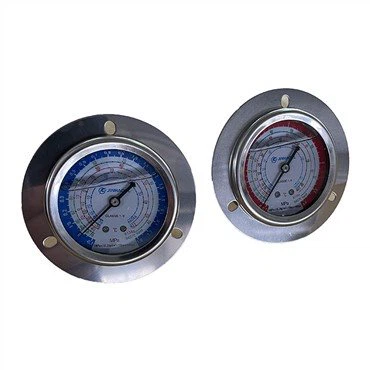
As a supplier of water-cooled chillers, I've had the privilege of witnessing the evolution of evaporator technology in these systems. Evaporators play a crucial role in water-cooled chillers, as they are responsible for absorbing heat from the process water or air, thereby cooling it down. In this blog post, I'll explore the different types of evaporators commonly used in water-cooled chillers, their advantages, and applications.
Shell and Tube Evaporators
Shell and tube evaporators are one of the most widely used types of evaporators in water-cooled chillers. They consist of a shell (a large cylindrical vessel) and a bundle of tubes inside the shell. The refrigerant flows inside the tubes, while the process water or air flows outside the tubes, around the shell.
How They Work
The refrigerant enters the tubes in a liquid state. As the process water or air passes over the tubes, it transfers heat to the refrigerant. This causes the refrigerant to boil and turn into a vapor. The vapor is then drawn out of the evaporator and into the compressor.
Advantages
- High Heat Transfer Efficiency: The large surface area of the tubes allows for efficient heat transfer between the refrigerant and the process fluid.
- Versatility: They can handle a wide range of flow rates and temperatures, making them suitable for various applications.
- Durability: The robust construction of shell and tube evaporators ensures long service life.
Applications
Shell and tube evaporators are commonly used in industrial applications, such as manufacturing plants, data centers, and hospitals. They are also used in large commercial buildings for air conditioning. For example, in a large manufacturing plant, a shell and tube evaporator can be used to cool the process water used in a production line. Check out our Water Cooled Condensing unit for more information on how our systems can be integrated with these evaporators.
Plate Evaporators
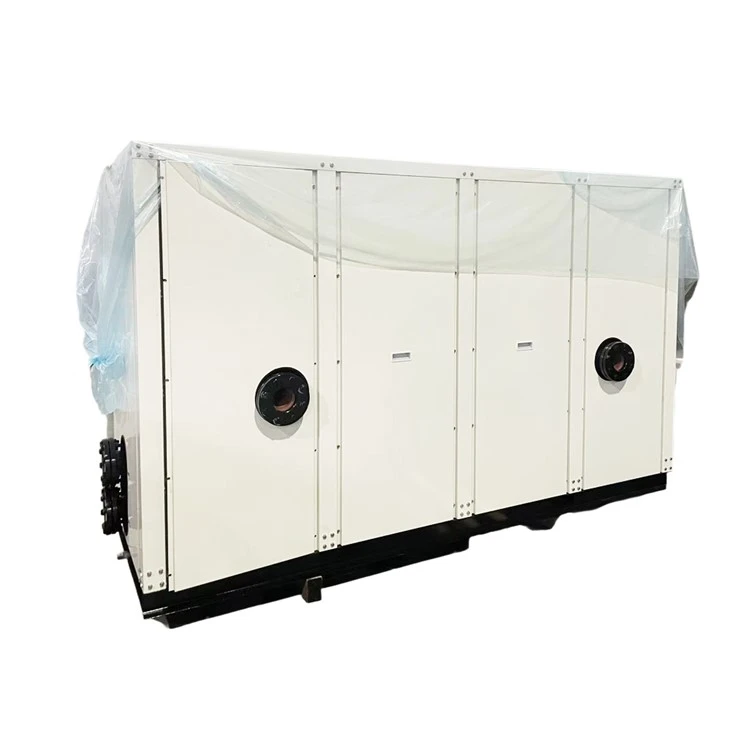
Plate evaporators are another popular choice for water-cooled chillers. They consist of a series of thin metal plates that are stacked together. The refrigerant and the process fluid flow through alternate channels between the plates.
How They Work
The refrigerant and the process fluid enter the evaporator through separate inlets. As they flow through the channels, heat is transferred from the process fluid to the refrigerant. The refrigerant boils and turns into a vapor, which is then removed from the evaporator.

Advantages
- Compact Design: Plate evaporators have a high heat transfer coefficient per unit volume, making them more compact than shell and tube evaporators.
- Easy Maintenance: The plates can be easily removed for cleaning and inspection.
- Energy Efficiency: The close contact between the refrigerant and the process fluid results in efficient heat transfer, reducing energy consumption.
Applications
Plate evaporators are commonly used in commercial applications, such as supermarkets, restaurants, and small office buildings. They are also suitable for applications where space is limited. For instance, in a supermarket, a plate evaporator can be used to cool the display cases. Our High-Efficiency Scroll Compressor Parallel Water-Cooled Chiller Unit | Multi-Scroll Water-Cooled Refrigeration System can be paired with plate evaporators for optimal performance.
Finned Tube Evaporators
Finned tube evaporators are designed to enhance the heat transfer surface area of the tubes. They consist of tubes with fins attached to the outside surface. The fins increase the surface area available for heat transfer, improving the efficiency of the evaporator.
How They Work
The refrigerant flows inside the tubes, while the process air flows over the fins. The fins transfer heat from the air to the refrigerant, causing the refrigerant to evaporate.
Advantages
- Enhanced Heat Transfer: The fins significantly increase the surface area, allowing for more efficient heat transfer.
- Lightweight and Compact: Finned tube evaporators are generally lighter and more compact than shell and tube evaporators.
- Good for Air-Cooled Applications: They are well-suited for applications where the process fluid is air, such as in air conditioning systems.
Applications
Finned tube evaporators are commonly used in residential and small commercial air conditioning systems. They are also used in some industrial applications where air cooling is required. For example, in a small office building, a finned tube evaporator can be used in the air handling unit to cool the incoming air. Our 30HP Water-Cooled Chiller Unit With Bitzer Semi-Hermetic Compressor can be combined with finned tube evaporators for effective cooling solutions.
Choosing the Right Evaporator
When selecting an evaporator for a water-cooled chiller, several factors need to be considered:
- Application Requirements: The type of application, such as industrial, commercial, or residential, will determine the appropriate evaporator type. For example, industrial applications may require a more robust and high-capacity evaporator, while residential applications may prioritize compactness and energy efficiency.
- Heat Load: The amount of heat that needs to be removed from the process fluid will influence the size and capacity of the evaporator. A larger heat load will require a larger evaporator with a higher heat transfer capacity.
- Space Constraints: The available space for the chiller system will also play a role in the choice of evaporator. If space is limited, a compact evaporator, such as a plate evaporator, may be more suitable.
- Cost: The initial cost and operating cost of the evaporator should be considered. While some evaporators may have a higher upfront cost, they may offer lower operating costs in the long run due to their energy efficiency.
Conclusion
In conclusion, the choice of evaporator in a water-cooled chiller depends on various factors, including the application, heat load, space constraints, and cost. Shell and tube evaporators are known for their high heat transfer efficiency and durability, making them suitable for industrial applications. Plate evaporators offer a compact design and easy maintenance, making them ideal for commercial applications with limited space. Finned tube evaporators are well-suited for air-cooled applications, such as residential and small commercial air conditioning systems.
As a water-cooled chiller supplier, we have the expertise and experience to help you select the right evaporator for your specific needs. Whether you're looking for a high-capacity industrial chiller or a compact commercial system, we can provide you with the best solutions. If you're interested in learning more about our water-cooled chillers and evaporator options, please contact us to start a discussion about your requirements. Our team of experts is ready to assist you in finding the perfect cooling solution for your project.
References
- ASHRAE Handbook - Refrigeration. American Society of Heating, Refrigerating and Air-Conditioning Engineers.
- Stoecker, W. F., & Jones, J. W. (1982). Refrigeration and Air Conditioning. McGraw-Hill.
- Dossat, R. J. (1991). Principles of Refrigeration. Prentice-Hall.