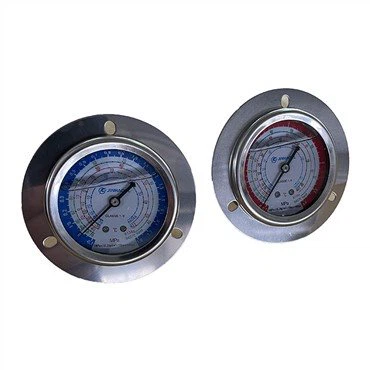
As a leading supplier of Cold Room Air Coolers, I've witnessed firsthand the pivotal role refrigerants play in the efficient operation of these essential cooling systems. In this blog, I'll delve into the types of refrigerants commonly used in cold room air coolers, exploring their characteristics, advantages, and considerations.
1. R - 404A
R - 404A has long been a staple in the refrigeration industry, especially for cold room air coolers. It is a hydrofluorocarbon (HFC) blend composed of R - 125, R - 143a, and R - 134a.
One of the key advantages of R - 404A is its high cooling capacity. Cold rooms often require a significant amount of cooling power to maintain low temperatures, and R - 404A can deliver this effectively. It has a relatively low operating pressure, which simplifies the design and construction of the refrigeration system. This refrigerant also has good compatibility with most common refrigeration lubricants, ensuring smooth operation of the compressor and other components.
However, R - 404A is not without its drawbacks. It has a high global warming potential (GWP) of around 3922. With the growing concern for environmental protection, many countries and regions are implementing regulations to phase out high - GWP refrigerants. As a result, the use of R - 404A is gradually being restricted. For example, in the European Union, there are strict regulations on the use and handling of R - 404A in new refrigeration systems.
2. R - 507
R - 507 is another HFC blend, similar to R - 404A, used in cold room air coolers. It consists of R - 125 and R - 143a.
R - 507 offers comparable cooling performance to R - 404A. It has a high cooling efficiency, which helps in reducing energy consumption. This is crucial for cold room operators as energy costs can be a significant part of their operational expenses. The thermodynamic properties of R - 507 are well - suited for low - temperature applications, making it an ideal choice for cold rooms that need to maintain very low temperatures.
In terms of environmental impact, while R - 507 also has a relatively high GWP (around 3985), it is often considered as a replacement for R - 404A in some applications. Some refrigeration equipment manufacturers are designing their cold room air coolers to be compatible with R - 507 as a more environmentally - friendly alternative, although it still falls under the category of high - GWP refrigerants and is subject to regulatory phase - out in the long run.
3. R - 290 (Propane)
R - 290, or propane, is a natural refrigerant that has gained increasing popularity in recent years. It is a hydrocarbon with excellent thermodynamic properties.
One of the most significant advantages of R - 290 is its extremely low GWP, which is close to zero. This makes it an environmentally friendly choice for cold room air coolers. Propane also has a high latent heat of vaporization, which means it can absorb a large amount of heat during the evaporation process, resulting in efficient cooling. Additionally, R - 290 has good miscibility with common refrigeration lubricants, facilitating the proper functioning of the refrigeration system.
However, the use of R - 290 also comes with challenges. Propane is flammable, which requires special safety precautions during installation, operation, and maintenance of the refrigeration system. Cold room air coolers using R - 290 need to be designed and installed in accordance with strict safety standards to prevent the risk of fire or explosion. Despite these challenges, with proper safety measures in place, R - 290 is becoming a viable option for many cold room applications.
4. R - 744 (Carbon Dioxide)
R - 744, or carbon dioxide, is another natural refrigerant that is being explored for use in cold room air coolers. It has unique thermodynamic properties that make it suitable for certain types of refrigeration systems.


Carbon dioxide has a very low GWP (equal to 1), which is a major advantage from an environmental perspective. It can operate at high pressures, which allows for compact system designs. In some cases, R - 744 can be used in transcritical refrigeration cycles, which can be particularly efficient in low - temperature applications.
However, the high - pressure operation of R - 744 systems requires specialized components and design. The equipment needs to be able to withstand the high pressures, which can increase the initial investment cost. Additionally, the efficiency of R - 744 systems can be affected by ambient temperature, and they may require more complex control strategies to optimize performance.
Compatibility with Cold Room Air Cooler Components
When selecting a refrigerant for a cold room air cooler, it's essential to consider its compatibility with the various components of the refrigeration system. Different refrigerants have different chemical and physical properties, which can affect the performance and lifespan of components such as the compressor, condenser, and evaporator.
For example, some refrigerants may react with certain types of lubricants, leading to reduced lubrication effectiveness and potential damage to the compressor. The choice of refrigerant also impacts the design of the Ceiling Evaporator. The heat transfer characteristics of the refrigerant determine the size and configuration of the evaporator needed to achieve the desired cooling capacity.
Similarly, the Compressor Condenser Evaporator unit as a whole needs to be designed to work optimally with the selected refrigerant. The pressure and temperature ranges of the refrigerant influence the design of the condenser and compressor, ensuring efficient heat rejection and compression processes.
Regulatory Considerations
The selection of a refrigerant for cold room air coolers is also heavily influenced by regulatory requirements. As mentioned earlier, many countries and international organizations are implementing regulations to reduce the use of high - GWP refrigerants. These regulations aim to mitigate the impact of refrigerants on global warming.
For instance, the Kigali Amendment to the Montreal Protocol targets the phasedown of HFCs, including R - 404A and R - 507. Suppliers of Cold Room Air Coolers need to stay updated with these regulations to ensure that their products comply with the legal requirements. This may involve transitioning to more environmentally friendly refrigerants in their product designs.
Conclusion
In conclusion, there are several types of refrigerants commonly used in cold room air coolers, each with its own set of advantages and disadvantages. The choice of refrigerant depends on various factors, including cooling requirements, environmental considerations, safety concerns, and regulatory compliance.
As a supplier of Cold Room Air Coolers, we are committed to providing our customers with the best - suited refrigeration solutions. We offer a range of products that are compatible with different refrigerants, ensuring that our customers can choose the option that meets their specific needs. Whether it's a high - performance system using traditional HFC refrigerants or an environmentally friendly solution with natural refrigerants, we have the expertise and products to deliver efficient and reliable cold room air coolers.
If you are in the market for a Cold Room Air Cooler or have any questions about refrigerants and their suitability for your cold room, we invite you to contact us for a detailed discussion. Our team of experts is ready to assist you in making the right choice for your refrigeration needs.
References
- ASHRAE Handbook - Refrigeration. American Society of Heating, Refrigerating and Air - Conditioning Engineers.
- International Institute of Refrigeration (IIR) publications on refrigerants and their applications.
- Regulations and guidelines from national and international environmental agencies regarding refrigerant use.