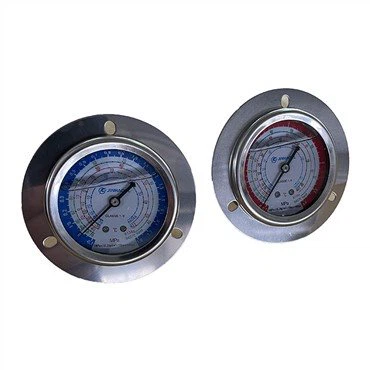
What is the water pressure required for a water cooled chiller?
Hey there! I'm a supplier of water cooled chillers, and I often get asked about the water pressure needed for these units. It's a crucial factor that can significantly impact the performance and efficiency of your chiller. So, let's dive right in and explore this topic in detail.
First off, it's important to understand why water pressure matters in a water cooled chiller. Water is used as a cooling medium in these systems, and it needs to flow through the chiller's condenser at the right pressure to effectively remove heat from the refrigerant. If the water pressure is too low, the flow rate may be insufficient, leading to poor heat transfer and reduced cooling capacity. On the other hand, if the pressure is too high, it can cause excessive stress on the system components, potentially leading to leaks or other damage.
So, what's the ideal water pressure for a water cooled chiller? Well, it depends on several factors, including the size and design of the chiller, the type of condenser used, and the specific application. In general, most water cooled chillers require a water pressure of between 20 and 60 psi (pounds per square inch) at the inlet of the condenser. However, some larger or more specialized chillers may require higher pressures, up to 100 psi or more.


It's also important to note that the water pressure should be maintained within a relatively narrow range to ensure optimal performance. Fluctuations in pressure can cause the chiller to operate inefficiently or even shut down unexpectedly. To maintain a stable water pressure, it's recommended to use a pressure regulator or other control device.
Another factor to consider is the water flow rate. In addition to the right pressure, the water needs to flow through the condenser at a sufficient rate to effectively remove heat. The flow rate required will depend on the size and capacity of the chiller, as well as the temperature difference between the refrigerant and the water. In general, a flow rate of between 2 and 6 gallons per minute (GPM) per ton of cooling capacity is recommended.
To ensure that your water cooled chiller is operating at peak efficiency, it's important to have the water pressure and flow rate regularly monitored and adjusted as needed. This can be done using a pressure gauge and flow meter, which can be installed at the inlet and outlet of the condenser. If you're not comfortable performing these checks yourself, it's recommended to hire a professional HVAC technician to do it for you.
Now, let's take a look at some of the different types of water cooled chillers and their specific water pressure requirements.
Water Cooled Screw Chiller
Water cooled screw chillers are a popular choice for large commercial and industrial applications. These chillers use a screw compressor to compress the refrigerant, and they require a relatively high water pressure to operate effectively. In general, a water pressure of between 30 and 60 psi is recommended for water cooled screw chillers. You can learn more about our Water Cooled Screw Chiller on our website.
Low-Temperature Screw Refrigeration Unit With Air-Cooled Condenser | Heavy-Duty Cooling For Industrial Applications
This type of unit is designed for applications that require low-temperature cooling, such as food processing or pharmaceutical manufacturing. While it has an air-cooled condenser, it still relies on water for other components, and the water pressure requirements can vary. Typically, a water pressure of around 20 to 40 psi may be suitable, but it's best to consult the manufacturer's specifications. Check out our Low-Temperature Screw Refrigeration Unit With Air-Cooled Condenser | Heavy-Duty Cooling For Industrial Applications for more details.
High-Performance Water Cooled Condensing Unit For Industrial & Commercial Refrigeration
High-performance water cooled condensing units are designed to provide efficient cooling for large industrial and commercial facilities. These units typically require a higher water pressure to ensure proper operation. A water pressure of between 40 and 80 psi is often recommended. Learn more about our High-Performance Water Cooled Condensing Unit For Industrial & Commercial Refrigeration.
In addition to the water pressure and flow rate, there are other factors that can affect the performance of a water cooled chiller. These include the water temperature, the quality of the water, and the cleanliness of the condenser. It's important to keep these factors in mind and take steps to ensure that the water used in the chiller is clean, free of contaminants, and at the right temperature.
So, there you have it! That's a brief overview of the water pressure required for a water cooled chiller. If you have any questions or need more information, please don't hesitate to contact us. We're here to help you choose the right chiller for your application and ensure that it operates at peak efficiency.
Whether you're in the market for a new water cooled chiller or need to upgrade your existing system, we have a wide range of options to choose from. Our team of experts can help you select the right chiller based on your specific needs and budget. So, if you're interested in learning more or discussing your requirements, just reach out to us. We're ready to start a conversation and help you find the perfect cooling solution for your business.
References
ASHRAE Handbook - HVAC Systems and Equipment. American Society of Heating, Refrigerating and Air-Conditioning Engineers.
Manufacturer's documentation for water cooled chillers.