Hey there! As a supplier of cold room air coolers, I often get asked about the recommended size of an air cooler for a large cold room. It's a crucial question because getting the size right can make a huge difference in the efficiency and effectiveness of your cold room.
First off, let's talk about why the size of the air cooler matters. A cold room is designed to store perishable items at a specific temperature. If the air cooler is too small, it won't be able to cool the room down to the required temperature, or it will have to work overtime, which can lead to higher energy costs and a shorter lifespan for the cooler. On the other hand, if the air cooler is too large, it might cool the room too quickly and cause temperature fluctuations, which can also be bad for the stored items.
So, how do you determine the right size of a cold room air cooler for a large cold room? Well, there are a few factors you need to consider.
Room Dimensions
The first and most obvious factor is the size of the cold room itself. You need to measure the length, width, and height of the room to calculate its volume. The larger the volume of the room, the more cooling capacity you'll need. A general rule of thumb is that you'll need about 1 ton of cooling capacity for every 1000 - 1500 cubic feet of space. But this is just a rough estimate, and other factors can affect the actual requirement.
For example, if your cold room is 30 feet long, 20 feet wide, and 10 feet high, the volume of the room would be 30 x 20 x 10 = 6000 cubic feet. Based on the rule of thumb, you might need between 4 and 6 tons of cooling capacity.
Insulation
The quality of insulation in the cold room is another important factor. Good insulation helps to keep the cold air inside the room and reduces the amount of heat that enters from the outside. A well - insulated cold room will require less cooling capacity compared to a poorly insulated one.
If your cold room has thick insulation with a high R - value (a measure of insulation effectiveness), you can probably get away with a slightly smaller air cooler. On the other hand, if the insulation is thin or damaged, you'll need a more powerful air cooler to compensate for the heat infiltration.

Heat Load
The heat load refers to the amount of heat that needs to be removed from the cold room. This includes the heat generated by the stored items, the heat from people entering and leaving the room, and the heat from any equipment inside the room, such as lighting and fans.
For instance, if you're storing fresh produce, they'll continue to respire and generate heat. The more produce you have, the higher the heat load. Similarly, if there are a lot of people working in the cold room or if you have high - wattage lighting, these will also contribute to the heat load.
Ambient Temperature
The temperature outside the cold room also plays a role. If the ambient temperature is very high, the air cooler will have to work harder to maintain the desired temperature inside the room. In hot climates, you'll generally need a larger air cooler compared to cooler climates.
Airflow Requirements
Proper airflow is essential for uniform cooling in the cold room. You need to make sure that the air cooler can distribute the cold air evenly throughout the room. Some cold rooms may require additional fans or ductwork to improve airflow.
When it comes to choosing the right type of air cooler for a large cold room, we offer a variety of options.
Dual Discharge Air Cooler
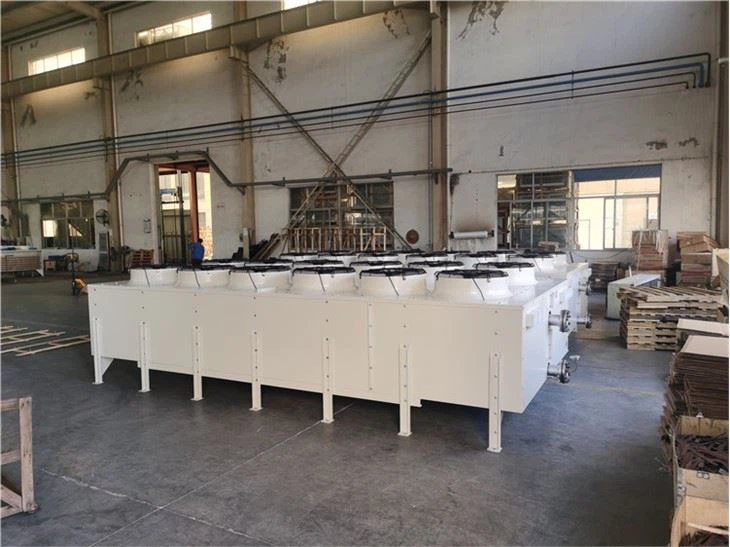
The Dual Discharge Air Cooler is a great choice for large cold rooms. It has two discharge outlets, which helps to distribute the cold air more effectively. This type of air cooler can cover a larger area and provide more uniform cooling.
Floor - standing Type Air Cooler
The Floor - standing Type Air Cooler is another option. It's designed to be placed on the floor, which can be convenient for some cold room layouts. It offers a good balance between cooling capacity and ease of installation.
Condensate Evaporator
We also have the Condensate Evaporator, which is useful for dealing with the condensate that forms on the air cooler. It helps to prevent water buildup and keeps the cold room dry.
To calculate the exact size of the air cooler you need, it's best to consult with a professional. We have a team of experts who can come to your site, assess your cold room, and recommend the most suitable air cooler based on all the factors we've discussed.
Once you have determined the right size and type of air cooler, proper installation and maintenance are also crucial. Make sure that the air cooler is installed correctly according to the manufacturer's instructions. Regular maintenance, such as cleaning the coils and checking the refrigerant levels, will ensure that the air cooler operates efficiently and has a long lifespan.
In conclusion, choosing the right size of a cold room air cooler for a large cold room is a complex process that involves considering multiple factors. But with the right information and the help of professionals, you can make an informed decision.
If you're in the market for a cold room air cooler, don't hesitate to reach out to us. We're here to help you find the perfect solution for your cold room needs. Whether you have a small cold room or a large industrial one, we have the products and expertise to meet your requirements. Let's work together to ensure that your cold room operates at its best!
References
ASHRAE Handbook - Refrigeration. American Society of Heating, Refrigerating and Air - Conditioning Engineers.
Industrial Cold Storage Design Guide. Various industry publications.