As a reputable supplier of air condensers, I often encounter inquiries about various technical aspects of these essential components in refrigeration and air - conditioning systems. One of the most frequently asked questions is, "What is the pressure drop in an air condenser?" In this blog, I will delve into the details of pressure drop in air condensers, its significance, factors affecting it, and how it relates to the performance of our products.
Understanding Pressure Drop in an Air Condenser
Pressure drop refers to the decrease in pressure that occurs as a fluid (in this case, air) flows through a system. In an air condenser, the refrigerant releases heat to the surrounding air as it changes from a high - pressure vapor to a liquid state. The air flowing over the condenser coils absorbs this heat, but during its passage, it experiences a reduction in pressure.


Mathematically, pressure drop ($\Delta P$) is calculated as the difference between the inlet pressure ($P_1$) and the outlet pressure ($P_2$) of the air flowing through the condenser: $\Delta P=P_1 - P_2$. This pressure drop is typically measured in units such as pascals (Pa), inches of water column (in. WC), or millibars (mbar).
Significance of Pressure Drop
The pressure drop in an air condenser is a critical parameter that has a direct impact on the overall performance and efficiency of the refrigeration or air - conditioning system.
- Energy Consumption: A higher pressure drop means that the fan has to work harder to push the air through the condenser. This results in increased energy consumption by the fan motor. In large - scale industrial applications, even a small increase in pressure drop can lead to significant additional energy costs over time.
- Heat Transfer Efficiency: Adequate air flow is essential for efficient heat transfer in the condenser. If the pressure drop is too high, the air flow rate may decrease, reducing the amount of heat that can be transferred from the refrigerant to the air. This can lead to poor system performance, higher refrigerant temperatures, and potentially reduced cooling capacity.
Factors Affecting Pressure Drop
Several factors can influence the pressure drop in an air condenser.
1. Coil Design
The design of the condenser coils plays a major role in determining the pressure drop.
- Fin Density: Condenser coils are often equipped with fins to increase the surface area available for heat transfer. A higher fin density means more surface area for heat exchange, but it also creates more resistance to air flow, resulting in a higher pressure drop.
- Tube Configuration: The arrangement of tubes in the coil, such as the number of rows and the tube pitch, can affect the air flow pattern. A more complex tube configuration may lead to increased turbulence and higher pressure drop.
2. Air Flow Rate
The speed at which air passes through the condenser is another important factor. Higher air flow rates generally result in higher pressure drops because the air has to overcome more resistance as it moves through the coils at a faster pace.
3. Dust and Debris
Over time, dust, dirt, and other debris can accumulate on the condenser coils and fins. This build - up acts as an additional barrier to air flow, increasing the pressure drop. Regular maintenance, such as cleaning the coils, is essential to keep the pressure drop within acceptable limits.
4. Refrigerant Charge
An improper refrigerant charge can also affect the pressure drop. If the refrigerant charge is too high, the condenser may become over - loaded, leading to increased pressure drop and reduced system efficiency.
Our Solutions to Manage Pressure Drop
At our company, we understand the importance of managing pressure drop in air condensers. We offer a range of high - quality products designed to minimize pressure drop while maximizing heat transfer efficiency.
- High - Performance H - Type Condenser 2 Holes: This condenser features an optimized coil design with a balanced fin density and tube configuration. The unique H - type design allows for efficient air flow, reducing the pressure drop while ensuring excellent heat transfer performance.
- Air Conditioner Condenser: Our air conditioner condensers are engineered to provide a consistent and reliable air flow with minimal pressure drop. They are equipped with advanced fan systems that can maintain the required air flow rate even under varying operating conditions.
- 4 - Fan V - Type Cabinet Condenser | High - Efficiency Air - Cooled Unit For Industrial Refrigeration: The V - type design of this condenser promotes better air distribution and reduces the overall pressure drop. The multiple fans are carefully selected and configured to work together to provide efficient air movement through the condenser.
Measuring and Monitoring Pressure Drop
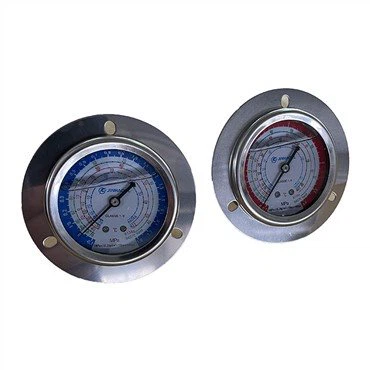
To ensure the optimal performance of our air condensers, it is important to measure and monitor the pressure drop regularly. This can be done using pressure sensors installed at the inlet and outlet of the condenser. By comparing the measured pressure drop with the manufacturer's specifications, any deviations can be detected early, allowing for timely maintenance or adjustments.
In addition, modern control systems can be used to continuously monitor the pressure drop and adjust the fan speed or other operating parameters to maintain the desired air flow rate and pressure drop.
Conclusion
Pressure drop in an air condenser is a crucial factor that affects the energy consumption, heat transfer efficiency, and overall performance of refrigeration and air - conditioning systems. As a leading supplier of air condensers, we are committed to providing products that are designed to minimize pressure drop and maximize efficiency.
If you are in the market for high - quality air condensers or have any questions about pressure drop and its impact on your system, we invite you to contact us for a detailed discussion. Our team of experts is ready to assist you in selecting the right condenser for your specific application and provide you with the support you need to ensure optimal system performance.
References
- ASHRAE Handbook - Refrigeration. American Society of Heating, Refrigerating and Air - Conditioning Engineers.
- Stoecker, W. F., & Jones, J. W. (1982). Refrigeration and Air Conditioning. McGraw - Hill.
- Incropera, F. P., & DeWitt, D. P. (2002). Fundamentals of Heat and Mass Transfer. John Wiley & Sons.