In the realm of industrial and commercial cooling, water cooled chillers stand as stalwarts, providing efficient and reliable temperature control across a wide spectrum of applications. As a dedicated supplier of water cooled chillers, I've had the privilege of witnessing firsthand the evolution of this technology and am acutely aware of the forces shaping its future. In this blog post, I'll delve into the key trends that are likely to define the future development of water cooled chillers, offering insights for businesses looking to invest in cutting - edge cooling solutions.
Energy Efficiency and Sustainability
One of the most prominent trends driving the future of water cooled chillers is the relentless pursuit of energy efficiency and sustainability. With growing concerns about climate change and rising energy costs, businesses are increasingly demanding cooling solutions that minimize their environmental footprint while maximizing operational efficiency.
Manufacturers are responding to this demand by integrating advanced technologies such as variable speed drives (VSDs), intelligent controls, and improved heat exchanger designs into their water cooled chillers. VSDs allow the chiller's compressor to adjust its speed based on the actual cooling load, reducing energy consumption during periods of low demand. Intelligent controls monitor and optimize the chiller's performance in real - time, ensuring that it operates at peak efficiency under various conditions.
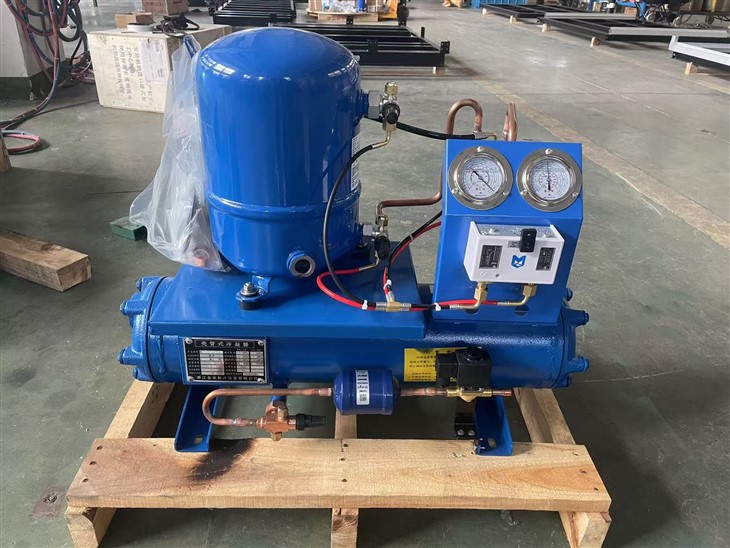
For example, Water Cooled Condensing unit we offer is equipped with state - of - the - art energy - saving features. These chillers are designed to meet and exceed the latest energy efficiency standards, helping businesses reduce their energy bills and carbon emissions. This trend towards energy - efficient chillers is not only beneficial for the environment but also offers significant cost savings for end - users in the long run.
Integration of Internet of Things (IoT)
The Internet of Things (IoT) is revolutionizing the way we interact with and manage industrial equipment, and water cooled chillers are no exception. By connecting chillers to the internet, businesses can remotely monitor and control their cooling systems, collect real - time data on performance, and predict maintenance needs before costly breakdowns occur.
IoT - enabled water cooled chillers come with sensors that continuously measure parameters such as temperature, pressure, flow rate, and energy consumption. This data is transmitted to a cloud - based platform where it can be analyzed and visualized using analytics tools. Facility managers can access this information from anywhere in the world via a smartphone, tablet, or computer, allowing them to make informed decisions about chiller operation and maintenance.
In addition, predictive maintenance algorithms can analyze the data collected from the chiller to identify potential issues early on. For instance, if the algorithm detects a sudden increase in energy consumption or a drop in cooling capacity, it can send an alert to the maintenance team, who can then take proactive steps to address the problem. Our Compact Water - Cooled Scroll Chiller Unit | Small Capacity Cooling Solution can be easily integrated with IoT systems, providing customers with enhanced control and monitoring capabilities.
Adaptation to New Refrigerants
The phase - out of traditional refrigerants with high global warming potential (GWP) is another major factor influencing the future development of water cooled chillers. In response to international agreements such as the Kigali Amendment to the Montreal Protocol, manufacturers are actively researching and developing chillers that use more environmentally friendly refrigerants.
New refrigerants such as hydrofluoroolefins (HFOs) and natural refrigerants like ammonia, carbon dioxide, and hydrocarbons are being considered as alternatives to the traditional hydrofluorocarbons (HFCs). These new refrigerants have lower GWPs, which means they have a reduced impact on the environment.
However, the use of these new refrigerants also presents challenges. For example, ammonia is toxic and flammable, and carbon dioxide requires high - pressure systems. Manufacturers need to design water cooled chillers that can safely and efficiently use these new refrigerants. Our Water Cooled Screw Chiller is being developed with the possibility of using a variety of refrigerants, including those with lower environmental impacts, to meet the changing regulatory requirements.
Modular and Compact Design
There is an increasing demand for water cooled chillers with modular and compact designs, especially in urban areas where space is limited. Modular chillers consist of multiple smaller units that can be combined to meet the specific cooling requirements of a facility. This modular approach offers several advantages, including easier installation, enhanced flexibility, and better scalability.
Compact chillers, on the other hand, are designed to occupy less floor space without sacrificing performance. They are ideal for applications in small commercial buildings, data centers, and industrial facilities with restricted space. Our compact water cooled chillers are engineered to provide high - performance cooling in a small footprint, making them a popular choice among customers with space constraints.

Enhanced Cooling Capacity and Performance
As industries continue to grow and evolve, the demand for water cooled chillers with higher cooling capacities and better performance is on the rise. In sectors such as data centers, where the heat generated by servers is constantly increasing, and in industrial processes that require precise temperature control, the need for more powerful and efficient chillers is critical.
Manufacturers are investing in research and development to improve the compressor technology, heat exchanger design, and overall system efficiency of water cooled chillers. This allows the chillers to deliver greater cooling capacity while maintaining energy efficiency. Advanced control algorithms are also being developed to optimize the chiller's performance under different operating conditions, ensuring that it can meet the diverse cooling needs of various industries.
Customization and Application - Specific Solutions
Different industries have unique cooling requirements, and there is a growing trend towards the development of customized water cooled chillers. Whether it's a pharmaceutical company that requires ultra - precise temperature control for drug manufacturing, a food processing plant that needs hygienic cooling solutions, or a large - scale industrial facility with specific load profiles, there is a need for chillers that can be tailored to these specific applications.
At our company, we offer a range of customizable water cooled chillers that can be configured to meet the exact specifications of our customers. From the choice of refrigerant and compressor to the size and layout of the chiller, we work closely with our clients to design cooling solutions that are optimized for their particular needs.
Conclusion
The future of water cooled chillers is bright, filled with exciting opportunities for innovation and growth. As energy efficiency, sustainability, IoT integration, new refrigerants, modular design, enhanced performance, and customization become increasingly important, water cooled chiller technology will continue to evolve to meet the changing needs of industries.
If you are in the market for a water cooled chiller and want to learn more about how our solutions can meet your specific cooling requirements, we invite you to engage with us. We can provide you with detailed information, product demonstrations, and expert advice to help you make an informed decision. Contact us to start a discussion about your cooling needs and discover how our water cooled chillers can offer you a competitive edge in your industry.
References
- Global Industry Analysts Inc. "Chillers - Global Market Trajectory & Analytics."
- International Institute of Refrigeration. "Recent Developments in Chiller Technologies."
- ASHRAE (American Society of Heating, Refrigerating and Air - Conditioning Engineers). "ASHRAE Handbook - Refrigeration."