As a supplier of Air Handling Units (AHUs), I understand the critical role these systems play in maintaining indoor air quality and climate control. Air pollution is a growing concern that can significantly impact the performance and lifespan of AHUs. In this blog, I'll share some effective strategies to protect an AHU from air pollution, drawing on my experience in the industry.
Understanding the Impact of Air Pollution on AHUs
Air pollution consists of various contaminants, including particulate matter (PM), volatile organic compounds (VOCs), and harmful gases such as sulfur dioxide (SO₂) and nitrogen oxides (NOₓ). When these pollutants enter an AHU, they can cause several problems.
Particulate matter can accumulate on the AHU's filters, coils, and fans. This accumulation restricts the airflow, reducing the system's efficiency and increasing energy consumption. Over time, a heavily clogged filter can even lead to system breakdowns. VOCs and harmful gases can corrode the internal components of the AHU, such as the metal parts of the coils and ductwork. This corrosion weakens the structure and reduces the system's overall performance and lifespan.
High - Quality Filtration Systems
One of the most effective ways to protect an AHU from air pollution is by installing high - quality filtration systems. Filters are the first line of defense in an AHU, capturing airborne particles before they can enter the system.
When choosing filters, it's important to consider the Minimum Efficiency Reporting Value (MERV). A higher MERV rating indicates a filter's ability to capture smaller particles. For environments with high levels of air pollution, filters with a MERV rating of 13 or higher are recommended. These filters can capture a significant portion of PM, dust, pollen, and even some bacteria and viruses.
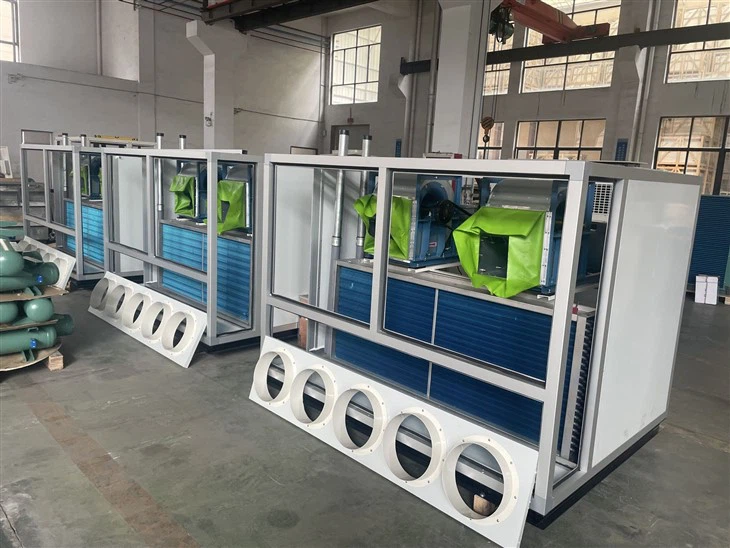
Modular Air Handling Unit (AHU) | Efficient Ventilation & Climate Control For Industrial And Commercial Buildings offers advanced filtration options that are designed to handle different levels of air pollution. These modular units can be customized to include the appropriate filters based on the specific environmental conditions of the building.
Regular Maintenance and Cleaning
Regular maintenance and cleaning are essential for protecting an AHU from air pollution. Maintenance should include checking and replacing filters regularly. A dirty or clogged filter not only reduces the system's efficiency but also allows pollutants to bypass the filter and enter the AHU.
In addition to filter replacement, the coils, fans, and ductwork of the AHU should be cleaned periodically. Coils can accumulate dirt and grime, which reduces their ability to transfer heat effectively. Fans can also become unbalanced due to the buildup of dirt, leading to increased energy consumption and potential damage to the motor. Ductwork can harbor pollutants and contaminants, which can be circulated throughout the building if not cleaned regularly.

A maintenance schedule should be established based on the level of air pollution in the area and the usage of the AHU. For example, in heavily polluted urban areas, filters may need to be replaced every 1 - 3 months, while in cleaner environments, a 3 - 6 - month interval may be sufficient.
Sealing and Insulation
Proper sealing and insulation of the AHU can prevent the entry of pollutants from the surrounding environment. Any gaps or cracks in the AHU's casing, ductwork, or connections can allow polluted air to leak into the system.
Sealing materials, such as gaskets and sealants, should be used to ensure a tight seal. This not only prevents the entry of pollutants but also improves the energy efficiency of the AHU by reducing air leakage. Insulation helps to maintain the temperature inside the AHU and prevents the formation of condensation, which can promote the growth of mold and mildew.
Air Quality Monitoring
Installing air quality monitoring systems in the vicinity of the AHU and within the building can provide real - time data on the levels of air pollution. These systems can detect the presence of PM, VOCs, and other harmful substances.
Based on the data collected, the AHU can be adjusted accordingly. For example, if the air quality monitoring system detects a high level of PM, the AHU can increase the fan speed to draw more air through the filters, or the system can be set to recirculate more indoor air to reduce the intake of polluted outdoor air.
Air Handling System can be integrated with advanced air quality monitoring technology, allowing for more precise control and protection against air pollution.
Pre - Treatment of Outdoor Air
In areas with extremely high levels of air pollution, pre - treatment of outdoor air can be considered. This can involve using technologies such as electrostatic precipitators or activated carbon filters to remove a significant portion of pollutants before the air enters the AHU.
Electrostatic precipitators use an electrostatic charge to attract and capture particulate matter. Activated carbon filters are effective in removing VOCs and some harmful gases. By pre - treating the outdoor air, the load on the AHU's internal filters is reduced, extending their lifespan and improving the overall performance of the system.
Employee Training
Proper training of building operators and maintenance staff is crucial for protecting an AHU from air pollution. They should be educated on the importance of regular maintenance, filter replacement, and air quality monitoring.
Employees should also be trained to recognize the signs of a malfunctioning AHU, such as reduced airflow, unusual noises, or increased energy consumption. Early detection of problems can prevent more serious damage to the AHU and ensure its continued operation.
Conclusion
Protecting an AHU from air pollution is essential for maintaining its performance, efficiency, and lifespan. By implementing strategies such as high - quality filtration, regular maintenance, proper sealing and insulation, air quality monitoring, pre - treatment of outdoor air, and employee training, building owners and operators can ensure that their AHUs continue to provide clean and healthy indoor air.
If you're interested in learning more about our Air Handling Unit System and how we can help you protect your AHU from air pollution, please feel free to contact us for a consultation. We look forward to working with you to provide the best air handling solutions for your building.
References
- American Society of Heating, Refrigerating and Air - Conditioning Engineers (ASHRAE). Standards and guidelines related to air handling systems and indoor air quality.
- World Health Organization (WHO). Reports on air pollution and its impact on human health and building systems.
- Industry research papers on the performance and maintenance of air handling units in polluted environments.