Hey there! I'm an air condenser supplier, and I've seen firsthand how ambient temperature can mess with these machines. In this blog, I'll break down the relationship between ambient temperature and air condensers, and why it's super important for you to understand if you're in the market for one.
Let's start with the basics. An air condenser is a key part of many cooling systems. It takes hot refrigerant gas and turns it back into a liquid by transferring heat to the surrounding air. The process is simple in theory, but in practice, a lot of factors can affect how well it works, and ambient temperature is one of the biggies.
How Ambient Temperature Affects Heat Transfer
The whole point of an air condenser is to transfer heat from the refrigerant to the air. This happens through a process called convection. The warmer the refrigerant is compared to the ambient air, the easier it is for heat to flow from the refrigerant to the air.

When the ambient temperature is low, the temperature difference between the refrigerant and the air is large. This means that heat transfer happens more efficiently. The condenser can cool the refrigerant quickly, and the system can operate at a high level of efficiency. You'll notice that your cooling system uses less energy, and it can reach and maintain the desired temperature more easily.
On the flip side, when the ambient temperature is high, the temperature difference between the refrigerant and the air is small. This makes it harder for heat to transfer from the refrigerant to the air. The condenser has to work harder to cool the refrigerant, which means it uses more energy. You might also find that your cooling system struggles to reach and maintain the desired temperature, especially on really hot days.
Impact on Condenser Capacity
The capacity of an air condenser refers to how much heat it can remove from the refrigerant in a given amount of time. Ambient temperature has a direct impact on condenser capacity.
In low ambient temperatures, the condenser can remove heat more efficiently, so its capacity is higher. This means that it can handle a larger load of hot refrigerant. If you have a cooling system that needs to cool a large space or a lot of equipment, a condenser operating in low ambient temperatures will be able to keep up more easily.
However, in high ambient temperatures, the condenser's capacity decreases. The reduced temperature difference between the refrigerant and the air makes it harder for the condenser to transfer heat. As a result, the condenser may not be able to handle the same load of hot refrigerant as it could in lower temperatures. This can lead to problems such as overheating of the refrigerant, which can damage the compressor and other components of the cooling system.
Effects on Compressor Performance
The compressor is another crucial part of the cooling system. It's responsible for compressing the refrigerant gas and circulating it through the system. Ambient temperature can have a big impact on compressor performance.
When the ambient temperature is low, the compressor doesn't have to work as hard. The condenser can cool the refrigerant quickly, so the compressor doesn't have to deal with high-pressure refrigerant. This means that the compressor uses less energy and has a longer lifespan.
But when the ambient temperature is high, the compressor has to work much harder. The condenser struggles to cool the refrigerant, which leads to higher pressure in the system. The compressor has to work against this higher pressure to circulate the refrigerant. This not only uses more energy but also puts more stress on the compressor, increasing the risk of breakdowns and reducing its lifespan.
Considerations for Different Ambient Temperatures
If you're in an area with low ambient temperatures, you have some advantages when it comes to air condensers. You can choose a smaller condenser because it will have a higher capacity in the cooler air. This can save you money on the initial purchase cost. You'll also enjoy lower energy costs because the system will operate more efficiently.
On the other hand, if you're in a hot climate, you need to be more careful when choosing an air condenser. You'll need a condenser with a higher capacity to handle the reduced efficiency caused by the high ambient temperature. You might also want to consider a condenser with features that can help it perform better in hot conditions, such as larger fans or more efficient heat exchangers.
Our Air Condenser Products
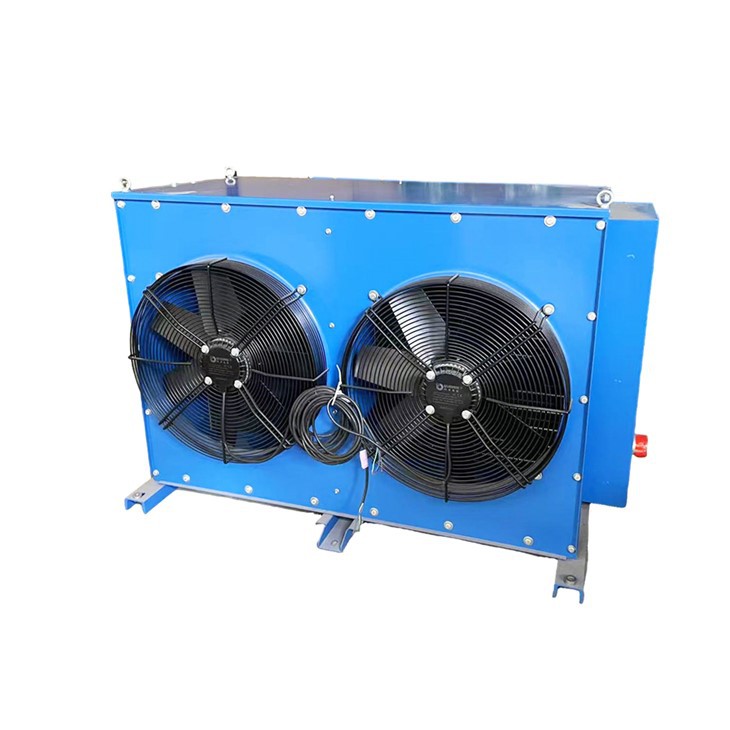
We offer a range of air condensers that are designed to perform well in different ambient temperatures. Check out our Blue Cabinet Type Condenser | 2-Fan Side Discharge Air-Cooled Unit With Extended Header Box. This unit is great for a variety of applications and can handle different temperature conditions.
If you need a more powerful option, our 4-Fan V-Type Air-Cooled Condensing Unit – High Efficiency, Durable, And Customizable is a top choice. It's designed to be efficient even in high ambient temperatures, thanks to its advanced design and high-quality components.
And for those who want a condenser with a unique look and great performance, our V-Type Air Cooled Condenser | Industrial Box Type Condenser With Custom Blue-White Color is the way to go. It combines style and functionality, and it can be customized to meet your specific needs.
Conclusion
As you can see, ambient temperature has a huge impact on air condensers. It affects heat transfer, condenser capacity, and compressor performance. Whether you're in a cold or hot climate, it's important to choose the right air condenser for your needs.
If you're looking for an air condenser that can handle the ambient temperature in your area, we're here to help. We have a wide range of products that are designed to perform well in different conditions. Contact us today to start the procurement discussion and find the perfect air condenser for your cooling system.
References
- ASHRAE Handbook of Refrigeration. American Society of Heating, Refrigerating and Air-Conditioning Engineers.
- "Principles of Refrigeration" by R. C. Downing.