Hey there! As a supplier of vibration absorbers, I've seen firsthand how these nifty little devices can save equipment from a whole lot of damage. In this blog, I'm gonna break down how vibration absorbers work their magic and protect your valuable gear.
What's the Big Deal with Vibration?
Before we dive into how vibration absorbers protect equipment, let's talk about why vibration is such a problem in the first place. Vibration can come from all sorts of sources, like rotating machinery, engines, or even external forces like earthquakes. When equipment vibrates, it can cause a whole host of issues.
First off, excessive vibration can lead to mechanical wear and tear. Think about it like this: if you're constantly shaking a piece of machinery, the moving parts are going to rub against each other more than they should. This friction can cause the parts to wear out faster, leading to breakdowns and costly repairs.
Vibration can also affect the accuracy and performance of equipment. For example, in precision manufacturing, even the slightest vibration can throw off the alignment of tools and cause defects in the finished product. In the case of sensitive electronic equipment, vibration can disrupt the delicate components and lead to malfunctions.
And let's not forget about noise. Vibration often creates a lot of noise, which can be a nuisance in the workplace and even a health hazard if it's loud enough. Excessive noise can cause hearing loss and other health problems for workers, not to mention it can make it difficult to communicate and focus on tasks.
How Vibration Absorbers Work
So, how do vibration absorbers solve these problems? Well, the basic idea behind a vibration absorber is to counteract the vibration forces acting on the equipment. There are a few different types of vibration absorbers, but they all work on the same principle of absorbing or dissipating the energy of the vibration.
One common type of vibration absorber is the passive vibration absorber. These absorbers are designed to resonate at a specific frequency, which is usually the same as the frequency of the vibration they're trying to cancel out. When the equipment vibrates, the passive absorber starts to vibrate at the same frequency, but in the opposite phase. This creates a counteracting force that reduces the overall vibration of the equipment.
Another type of vibration absorber is the active vibration absorber. Unlike passive absorbers, active absorbers use sensors and actuators to detect and respond to the vibration in real-time. The sensors measure the vibration of the equipment, and the actuators generate a force that opposes the vibration. This allows the active absorber to adapt to changes in the vibration frequency and amplitude, making it more effective than passive absorbers in some situations.
There are also tuned mass dampers, which are a type of passive vibration absorber commonly used in tall buildings and bridges. These dampers consist of a large mass attached to the structure by springs and dampers. When the building or bridge vibrates, the mass moves in the opposite direction, absorbing the energy of the vibration and reducing the amplitude of the motion.
Protecting Different Types of Equipment
Now that we know how vibration absorbers work, let's take a look at how they can protect different types of equipment.
Industrial Machinery
In industrial settings, vibration absorbers are used to protect all sorts of machinery, from motors and pumps to conveyor belts and compressors. By reducing the vibration of these machines, vibration absorbers can extend their lifespan, improve their performance, and reduce the risk of breakdowns.
For example, in a manufacturing plant, a motor-driven conveyor belt might experience a lot of vibration due to the uneven movement of the belt and the weight of the products being transported. By installing vibration absorbers on the conveyor belt, the vibration can be reduced, which can prevent the belt from wearing out prematurely and reduce the risk of product damage.
Electronic Equipment
Electronic equipment is particularly sensitive to vibration, as even the slightest movement can disrupt the delicate components. Vibration absorbers are often used in electronic devices such as computers, servers, and medical equipment to protect them from damage.
For instance, in a data center, servers generate a lot of heat, which requires powerful cooling fans to keep them at a safe temperature. These fans can cause a significant amount of vibration, which can damage the hard drives and other components of the servers. By installing vibration absorbers on the servers, the vibration can be reduced, which can improve the reliability and performance of the data center.
Automotive Industry
In the automotive industry, vibration absorbers are used in a variety of applications, from engines and transmissions to suspension systems and exhaust systems. By reducing the vibration of these components, vibration absorbers can improve the ride comfort of the vehicle, reduce noise, and increase the lifespan of the parts.
For example, in a car engine, the pistons and crankshaft generate a lot of vibration as they move up and down. By installing vibration absorbers on the engine mounts, the vibration can be reduced, which can improve the smoothness of the engine operation and reduce the noise and vibration felt by the passengers.
The Importance of Choosing the Right Vibration Absorber
Not all vibration absorbers are created equal, and choosing the right one for your equipment is crucial. There are a few factors to consider when selecting a vibration absorber, including the frequency and amplitude of the vibration, the type of equipment being protected, and the environment in which the equipment operates.
For example, if you're protecting a piece of equipment that operates at a high frequency, you'll need a vibration absorber that is designed to resonate at that frequency. If the equipment is exposed to harsh environmental conditions, such as high temperatures or corrosive chemicals, you'll need a vibration absorber that is made from materials that can withstand those conditions.


It's also important to consider the size and weight of the vibration absorber. If the absorber is too large or heavy, it can add unnecessary weight to the equipment and affect its performance. On the other hand, if the absorber is too small, it may not be able to effectively reduce the vibration.
Related Products and Their Roles
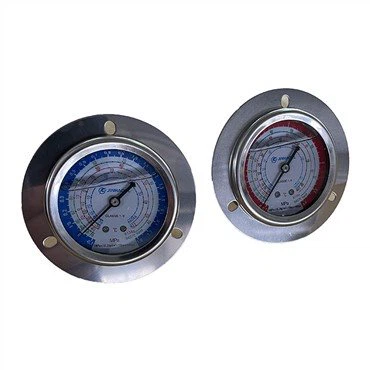
In addition to vibration absorbers, there are other products that can play a role in protecting equipment. For example, an Oil Gauge is an important tool for monitoring the oil level in machinery. Proper oil levels are crucial for the smooth operation of many types of equipment, and an oil gauge helps ensure that the oil is at the right level, reducing the risk of damage due to insufficient lubrication.
A Liquid Distributor is used in refrigeration and other systems to evenly distribute liquid. This helps maintain consistent performance and can prevent issues caused by uneven distribution, such as overheating or inefficient operation.
A Stop Valve is a simple yet essential component that can be used to control the flow of fluids in a system. By shutting off the flow when necessary, stop valves can prevent damage to equipment caused by excessive pressure or flow.
Contact Us for Your Vibration Absorber Needs
If you're looking for a reliable vibration absorber to protect your equipment, look no further. As a leading supplier of vibration absorbers, we have a wide range of products to suit your needs. Our team of experts can help you choose the right vibration absorber for your equipment and provide you with the support and advice you need to ensure its proper installation and operation.
Whether you're in the industrial, automotive, or electronics industry, we have the solutions to keep your equipment running smoothly and efficiently. Don't let vibration damage your valuable equipment. Contact us today to learn more about our vibration absorbers and how they can benefit your business.
References
- Den Hartog, J. P. (1985). Mechanical Vibrations. Dover Publications.
- Meirovitch, L. (2001). Fundamentals of Vibrations. McGraw-Hill.
- Rao, S. S. (2011). Mechanical Vibrations. Pearson Education.