Hey there! As a supplier of Rotalock Valves, I've seen firsthand how these nifty devices deal with fluid viscosity. It's a topic that doesn't get enough attention, but it's super important, especially when you're working with different types of fluids in various applications.
Let's start by understanding what fluid viscosity is. In simple terms, viscosity is a measure of a fluid's resistance to flow. Think of it like this: honey is more viscous than water. Honey flows slowly because its molecules are more sticky and resist moving past each other, while water flows easily.
Now, Rotalock Valves are designed to handle a wide range of fluid viscosities. They're used in many industries, like refrigeration, where different refrigerants have different viscosities. The way these valves work is based on a few key principles that help them adapt to the viscosity of the fluid they're dealing with.
One of the main features of Rotalock Valves is their sealing mechanism. These valves have a tight seal that prevents leakage, no matter how thick or thin the fluid is. For more viscous fluids, the seal needs to be even more reliable because the fluid doesn't flow as easily and can put more pressure on the valve. The Rotalock design uses a combination of materials and precision engineering to ensure a perfect seal. This is crucial because any leakage can lead to inefficiencies in the system and even cause damage over time.
Another important aspect is the flow path inside the valve. Rotalock Valves are engineered to have a smooth and optimized flow path. When dealing with viscous fluids, a smooth flow path is essential to reduce the resistance and allow the fluid to move through the valve without too much pressure drop. The valve's internal geometry is carefully designed to minimize any sharp turns or restrictions that could cause the fluid to slow down or clog.
Let's talk about how Rotalock Valves perform in different scenarios based on fluid viscosity. In low - viscosity applications, like with some light refrigerants, the valves can operate with high efficiency. The fluid flows easily through the valve, and the valve can open and close quickly. This means that the system can respond rapidly to changes in pressure and flow requirements.
On the other hand, when it comes to high - viscosity fluids, such as certain lubricants or thick refrigerants, the valves need to work a bit harder. The valve's actuator, which is responsible for opening and closing the valve, may need more force to overcome the resistance of the viscous fluid. However, Rotalock Valves are built with robust actuators that can handle this extra load. The valve also needs to be sized correctly for the application. A valve that is too small for a high - viscosity fluid may cause excessive pressure drop, while a valve that is too large may not provide precise control.
Now, let's consider some of the products that are related to Rotalock Valves and can be affected by fluid viscosity. For example, Copper Spare Parts are often used in conjunction with these valves. Copper is a great material because it's durable and has good heat transfer properties. But when dealing with viscous fluids, the spare parts need to be designed to work with the specific flow characteristics of the fluid.
Liquid Distributor is another important component. It distributes the fluid evenly throughout the system. In a high - viscosity situation, the distributor needs to be able to handle the thicker fluid and ensure that it is distributed uniformly. Rotalock Valves can work in harmony with liquid distributors to optimize the flow of viscous fluids.
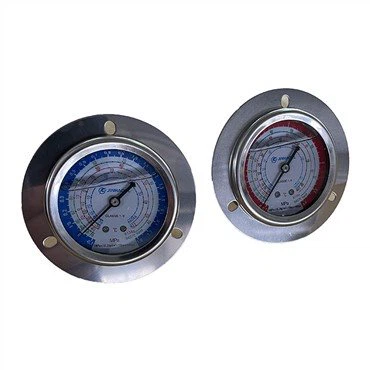
Oil Gauge is also related to our discussion. When monitoring the performance of a system with viscous fluids, an accurate oil gauge is crucial. The gauge needs to be able to measure the pressure and level of the oil, which can be affected by the viscosity. Rotalock Valves can help maintain the right pressure and flow in the system, which in turn affects the readings on the oil gauge.
In the refrigeration industry, where Rotalock Valves are widely used, fluid viscosity can have a big impact on the overall performance of the system. For example, in a commercial refrigeration unit, if the refrigerant has a high viscosity, it can affect the compressor's efficiency. The compressor needs to work harder to circulate the thick refrigerant through the system. Rotalock Valves can help regulate the flow of the refrigerant, ensuring that the compressor doesn't have to work too hard and reducing energy consumption.
In industrial applications, such as chemical processing, where different viscous fluids are used, Rotalock Valves play a vital role. They can handle corrosive and thick chemicals, providing a reliable and safe way to control the flow of these fluids. The valves need to be made of materials that are resistant to the chemicals and can withstand the high pressures that may be associated with viscous fluids.
To sum it up, Rotalock Valves are versatile and can handle a wide range of fluid viscosities. Their design features, such as the sealing mechanism, flow path, and robust actuators, make them suitable for different applications. Whether you're dealing with low - viscosity refrigerants or high - viscosity lubricants, these valves can provide efficient and reliable performance.
If you're in the market for Rotalock Valves or related products like Copper Spare Parts, Liquid Distributor, or Oil Gauge, I'd love to have a chat with you. We can discuss your specific requirements and find the best solutions for your application. Don't hesitate to reach out and start a conversation about how we can work together to meet your needs.


References:
- Engineering textbooks on fluid mechanics and valve design
- Industry reports on refrigeration and chemical processing applications