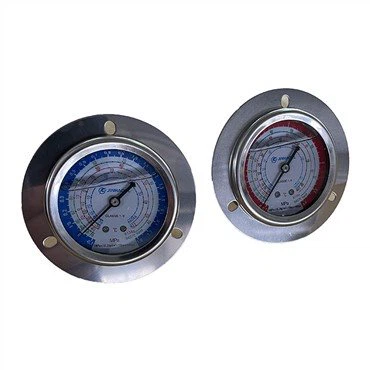
Can copper spare parts be used in high - pressure systems? Well, that's a question I get asked a lot as a supplier of copper spare parts. In this blog, I'm gonna break down whether copper is a good fit for high - pressure environments, the pros and cons, and some real - world applications.
First off, let's talk about what makes copper a popular choice for spare parts in general. Copper is a highly malleable metal, which means it can be easily shaped into all sorts of parts. Whether you need a Vibration Absorber, a Liquid Distributor, or an Oil Gauge, copper can be crafted to meet those specific needs. It also has excellent thermal conductivity. This property is super important in many systems where heat transfer is a key factor. For example, in a refrigeration system, copper pipes can quickly transfer heat, making the cooling process more efficient.
Now, let's dive into the high - pressure aspect. Copper has some decent strength. It can handle a certain amount of pressure without deforming or failing. In fact, in some low - to medium - high - pressure applications, copper spare parts work just fine. Take plumbing systems for instance. Copper pipes are commonly used in household and commercial plumbing to carry water under pressure. These pipes can withstand the normal water pressure without any issues.
But when we're talking about extremely high - pressure systems, things get a bit more complicated. One of the main concerns with using copper in high - pressure systems is its yield strength. Yield strength is the point at which a material starts to deform permanently. Compared to some other metals like steel, copper has a relatively lower yield strength. So, in a system with very high pressures, there's a risk that the copper spare parts could start to deform, leading to leaks or even complete failure of the part.
Another factor to consider is corrosion. While copper is generally resistant to corrosion, in some high - pressure environments, especially those with certain chemicals or gases, corrosion can become a problem. For example, in a chemical processing plant where high - pressure gases are involved, the presence of corrosive substances can eat away at the copper over time. This not only weakens the part but can also contaminate the system.
However, it's not all bad news. There are ways to make copper more suitable for high - pressure systems. One approach is to use alloys of copper. By adding other elements to copper, we can increase its strength and corrosion resistance. For example, brass is a copper - zinc alloy. Brass has better strength than pure copper and can handle higher pressures in some applications. Another option is to use copper - nickel alloys. These alloys have excellent corrosion resistance and can be used in high - pressure marine and offshore applications.
In addition to using alloys, proper design and installation are crucial. When designing copper spare parts for high - pressure systems, engineers need to take into account the expected pressure levels and design the parts accordingly. This might involve increasing the thickness of the part or using a different shape to distribute the pressure more evenly. And during installation, it's important to ensure that the parts are installed correctly, with proper seals and connections to prevent any pressure - related issues.


Let's look at some real - world examples of copper spare parts in high - pressure systems. In the automotive industry, copper - based gaskets are sometimes used in high - pressure engine components. These gaskets need to seal the high - pressure combustion chambers and prevent any leakage of gases. With the right design and material selection, these copper gaskets can perform well under the extreme pressures and temperatures inside an engine.
In the aerospace industry, copper is used in some high - pressure hydraulic systems. Hydraulic systems rely on high - pressure fluids to operate various components of an aircraft. Copper pipes and fittings are used in these systems because of their good thermal conductivity and ability to handle moderate high pressures. However, strict quality control and maintenance are required to ensure the safety and reliability of these parts.
So, can copper spare parts be used in high - pressure systems? The answer is yes, but with some caveats. It depends on the specific application, the level of pressure, and the environment. If the pressure is within the capabilities of copper or its alloys, and proper design and maintenance are in place, copper spare parts can be a viable option. But in extremely high - pressure and harsh environments, other materials might be a better choice.
If you're in the market for copper spare parts for your high - pressure system, or you're just looking for more information, I'd love to have a chat with you. As a supplier of copper spare parts, I have a lot of experience and knowledge in this area. We can discuss your specific requirements and see if copper is the right fit for your application. Don't hesitate to reach out for a consultation and let's find the best solution together.
References:
- "Materials Science and Engineering: An Introduction" by William D. Callister, Jr. and David G. Rethwisch
- "Handbook of Copper and Copper Alloys" by ASM International